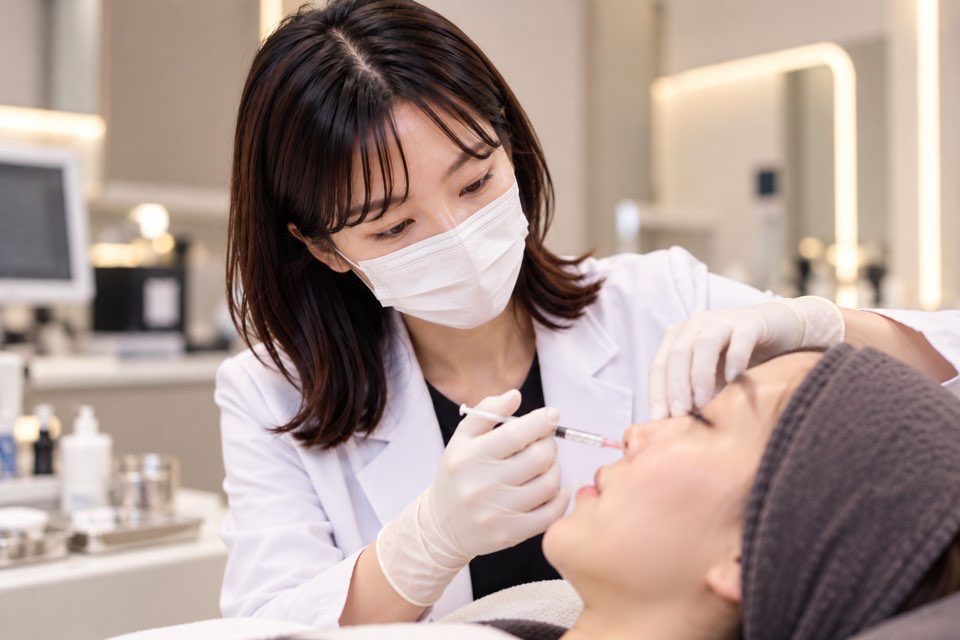
Double Chin & Jawline Definition — Treatment Options in Seoul
A double chin, or submental fullness, is one of the most common concerns raised during aesthetic consultations in Seoul. It can result from genetics, skin laxity, weight fluctuation, or the natural loss of facial elasticity that comes with age. For patients researching a double chin treatment Seoul clinics offer, it helps to understand that there is no single fix — the right approach depends on whether the issue is primarily excess fat, loose skin, or a combination of both. This page outlines non-surgical lifting options available at DOD Skin Cheongdam and explains what each involves.
Understanding the Concern
Submental fullness and jawline blurring often develop gradually. Some patients notice it appearing after weight gain; others see it emerge as skin loses collagen and begins to sag along the lower face and neck. Because the causes vary, results from any single treatment will also vary from person to person. A consultation with a doctor is the appropriate first step to determine which factors are contributing to your particular case before choosing among lifting options.
Treatment Options for Jawline Definition
DOD Skin Cheongdam offers several energy-based lifting devices that are commonly used to address skin laxity around the jawline and lower face. These are non-surgical treatments that work by delivering controlled energy to deeper skin layers, encouraging the skin's own structural response over time.
| Treatment | Type | Typical Use |
|---|---|---|
| Ulthera (Ultherapy) | High-intensity focused ultrasound | Addresses skin laxity and jawline sagging by targeting deeper tissue layers |
| Thermage | Radiofrequency | Improves skin elasticity and facial contour |
| Densiti | Lifting device (on-demand program) | Part of the clinic's broader lifting protocol |
None of these devices remove fat directly; they are aimed at skin tightening and contour support. If fat volume is the primary concern rather than skin laxity, a doctor may discuss whether a lifting treatment is appropriate at all, or whether it should be combined with other approaches.
Who It Suits
These lifting treatments are generally considered for adults who have mild to moderate skin laxity along the jaw and neck but who are not seeking or ready for surgical intervention. Patients who want a gradual improvement in jawline definition, rather than an immediate dramatic change, tend to be reasonable candidates. Because outcomes depend on individual skin quality, age, and the degree of laxity, a doctor's assessment during consultation is necessary before proceeding.
Who Should Avoid It
Energy-based lifting devices are not suitable for everyone. Patients who are pregnant, have active skin infections or inflammation in the treatment area, have certain implanted medical devices, or have specific underlying health conditions should discuss these factors with a doctor beforehand. Those seeking significant fat reduction rather than skin tightening may find that these treatments are not the primary solution for their goals. A full medical history review during consultation helps identify anyone for whom these treatments are not recommended.
How the Session Goes
A typical visit begins with a consultation where a doctor examines the jawline and neck area, discusses your concerns and expectations, and reviews your medical history. During the treatment itself, the device is applied to cleansed skin, and energy is delivered in a grid pattern across the treatment area. Some patients describe sensations of warmth or brief discomfort during the session, which the practitioner can help manage. Session length depends on the device used and the treatment area size, and this will be explained in detail during your consultation.
Downtime and Recovery
Most patients experience mild redness or warmth in the treated area immediately afterward, which typically settles within a few hours to a day. Some may notice mild swelling or tenderness for a short period following treatment. These lifting treatments are generally categorized as low-downtime procedures, meaning many patients return to regular daily activities the same day, though individual recovery experiences can differ. Any specific aftercare instructions, including sun protection or skincare adjustments, will be provided by the treating doctor based on your particular case.
It is also important to understand that visible improvement from these treatments tends to build gradually over weeks to months, as the skin's structural response develops. Results are not immediate in the way surgical procedures might be, and the degree of improvement varies by individual factors such as age, skin condition, and lifestyle.
Pricing
Specific pricing for Ulthera, Thermage, and Densiti is not published on this page, as treatment plans are customized based on the treatment area, number of passes or sessions required, and individual assessment. Prices, along with any applicable VAT, and consultation fees may vary and should be confirmed directly with the clinic before booking. For current pricing information, please contact DOD Skin Cheongdam at 02-6203-6263 or [email protected].
Safety
As with any energy-based aesthetic treatment, individual response and risk factors differ. Consultation with a qualified doctor beforehand is essential to review your medical history and determine appropriate treatment parameters. At DOD Skin Cheongdam, treatments are provided within a clinic setting where doctors such as Lee Joon, a Dermatology Specialist, and other staff physicians are available to conduct consultations. No treatment can guarantee a specific outcome, and patients should discuss realistic expectations, potential side effects, and alternative options with their doctor prior to any procedure.
Visiting the Clinic
DOD Skin Cheongdam is located at 423 Dosan-daero, Gangnam-gu, Seoul, in the Cheongdam-dong area. The clinic is open Monday through Thursday and Saturday during standard hours, with extended hours on Friday until 21:00, and a midday break from 13:00 to 14:00 on weekdays. International patients researching a double chin treatment Seoul option are encouraged to schedule a consultation in advance to allow time for a thorough assessment and translation support if needed.
Frequently asked questions
How many sessions are usually needed for jawline lifting treatments?
The number of sessions depends on the specific device used, the degree of skin laxity, and individual response, so this is best determined during a consultation with the treating doctor.
Is Ulthera or Thermage more suitable for a double chin?
Both are non-surgical lifting options that target skin laxity in different ways; a doctor will assess your skin condition and goals to recommend which option, or combination, may be more appropriate.
Will these treatments remove fat under the chin?
These are primarily skin-tightening treatments rather than fat-reduction procedures, so if excess fat volume is the main concern, this should be discussed separately with a doctor.
How soon will I see results after treatment?
Improvement typically develops gradually over weeks to months as the skin responds to the treatment, and the timeline and degree of change vary between individuals.
Is there significant downtime after jawline lifting treatments?
Most patients experience only mild, short-term redness or swelling and are able to resume normal activities soon after, though recovery experiences can differ from person to person.